

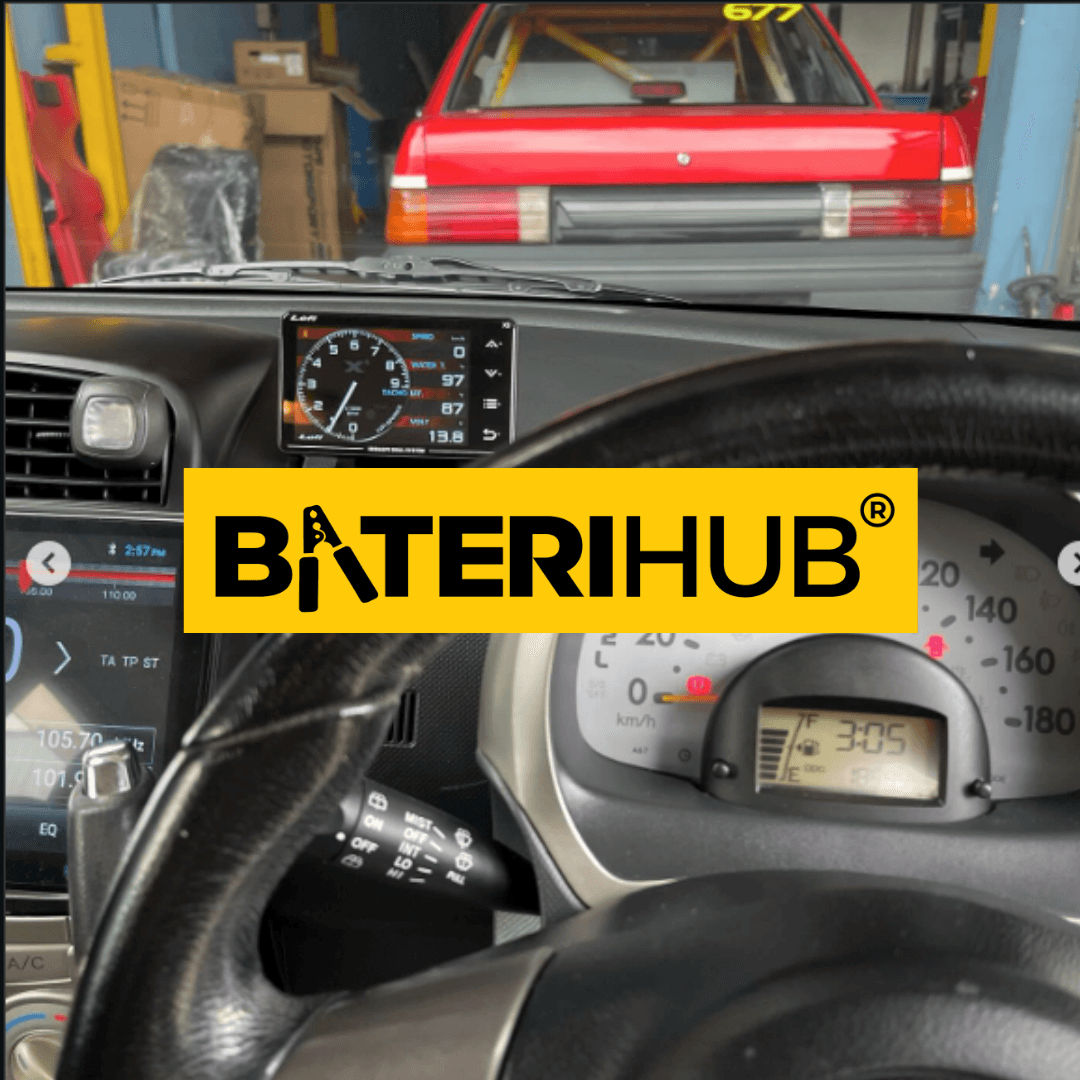
Modern cars are smarter than ever but most drivers never see what’s really happening under the hood.
Your engine temperature, battery voltage, throttle position, fuel trims, boost pressure all this data is already monitored by your vehicle’s computer. An OBD2 gauge simply allows you to access that data in real time.
Before we dive in:
OBD2 gauges work reliably on cars manufactured from ~2003 onwards.
If your car is older, there are alternatives such as standalone gauges with direct sensors and we’ll explain that too.
Let’s explore what an OBD2 gauge is, why it matters, and whether it’s worth using in Malaysia.
What Is an OBD2 Gauge?
OBD2 stands for On-Board Diagnostics II, a universal vehicle communication standard introduced in the mid-1990s and widely implemented from 2003 onwards in most cars sold here in Malaysia.
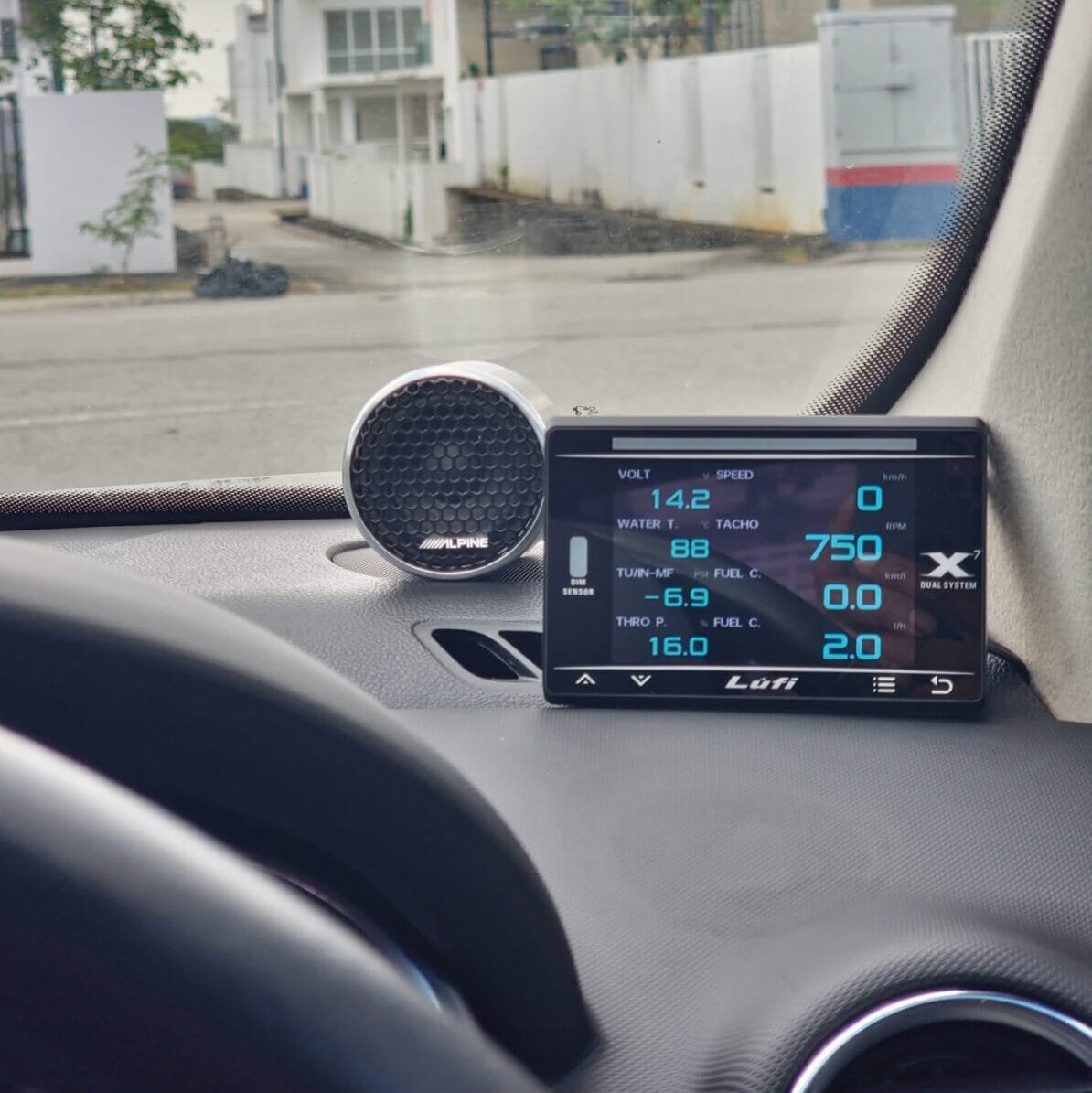
An OBD2 gauge plugs into your car’s OBD port (usually under the dashboard) and reads live data from the car’s ECU. It then displays useful metrics such as:
- Engine temperature
- Battery voltage
- RPM
- Fuel consumption
- Throttle position
- Boost pressure (for turbo cars)
- Air intake temperature
- Fault codes (Check Engine Light)
It turns your car into a real-time performance dashboard.
Why It’s Actually Useful (Not Just a Fancy Gadget)
1. Early Detection of Potential Issues
One of the biggest advantages of using an OBD2 gauge is early problem detection.
Instead of waiting for a warning light, you can watch metrics such as:
- Engine temperature climbing above normal
- Battery voltage dropping irregularly
- Erratic fuel trims
These can signal issues like overheating, battery stress, or faulty sensors before they become major repairs especially useful in Malaysia’s hot climate.
2. Monitor Battery Health in Real Time
Most drivers only realise their battery is weak when the car doesn’t start.
With an OBD2 gauge, you can monitor:
- Battery voltage at engine off (normal: ~12.4–12.7V)
- Charging voltage while running (normal: ~13.5–14.5V)
If voltage stays low or fluctuates, it could indicate:
- Weak battery
- Alternator issues
- Parasitic drain
This is especially helpful in Malaysia, where heat and humidity can shorten battery life to 1–2 years.
3. Decode Check Engine Lights Immediately
When the Check Engine Light illuminates, it only means something is wrong not what.
An OBD2 gauge can:
- Read diagnostic codes (DTCs)
- Display basic code explanations
- Help you decide whether it’s urgent
- (In some cases) Clear minor codes
This saves time and helps you communicate clearly with your mechanic.
4. Improve Fuel Economy and Driving Efficiency
OBD2 gauges often show:
- Instant fuel consumption
- Long-term fuel trim data
- Air-fuel ratios
This helps you adapt your driving habits:
- Smoother acceleration
- Better cruising speed
- Avoid unnecessary idling
Over time, this can lower fuel costs especially in stop-start city traffic.
5. Useful for Turbo & Performance Cars
For cars with forced induction (turbocharged models like Proton X50, Honda Civic Turbo, or BMW), an OBD2 gauge can provide:
- Boost pressure readings
- Intake air temperature
- Engine load
- Throttle position
This helps enthusiasts track performance safely without guesswork.
Does My Car Support OBD2 Gauges?
Most cars manufactured from 2003 onwardċ support OBD2, including popular models in Malaysia such as:
- Perodua Myvi / Ativa
- Toyota Vios / Corolla / Yaris
- Honda City / Civic / HR-V / CR-V
- BMW 3 Series / 5 Series
- Mercedes C-Class
- Proton X50 / X70 / Saga
For these vehicles, an OBD2 gauge can pull live data directly from the ECU.
What if My Car Is Older (Pre-2003)?
If your car predates OBD2 support, don’t worry, you still have options.
Older cars can use standalone gauges that connect to direct sensors installed in the engine bay. These gauges do not rely on the vehicle’s ECU and instead measure specific parameters via dedicated hardware.
Common standalone gauges include:
| Gauge Type | What It Monitors | How It Works |
| Mechanical Oil Pressure Gauge | Oil pressure | Connected directly to oil ports via sensor |
| Water / Coolant Temperature Gauge | Engine temperature | Wired to coolant lines |
| Voltmeter | Battery and alternator voltage | Wired to battery terminals |
| Tachometer | Engine RPM | Connected to ignition coil signal |
| Boost Gauge (Turbo) | Turbo boost pressure | Linked to intake manifold |
These gauges are often more accurate for specific metrics and are popular among enthusiasts who want precise control without OBD connectivity.
OBD2 Gauges and Battery Health
One of the most practical uses of an OBD2 gauge especially here in Malaysia is battery health monitoring.
If your gauge shows:
- Voltage dropping below 12V overnight
- Charging voltage less than 13.5V
- Large voltage fluctuations
It’s likely your battery is weakening, or your charging system is under stress.
In these cases, it’s worth getting a professional battery health check.
How BateriHub Can Help
At BateriHub, we offer:
- Free battery health checks
- Professional on-site installation
- Fast battery delivery
- Up to 18 months warranty
- Support for vehicles across major Malaysian cities
Whether your OBD2 gauge is showing abnormal readings, or you simply want peace of mind, BateriHub technicians can help you accurately diagnose and fix the issue.
FAQ
What is an OBD2 gauge?
An OBD2 gauge is a diagnostic device that connects to your car’s OBD2 port to display real-time data such as engine temperature, battery voltage, RPM, fuel consumption, and diagnostic trouble codes.
Do all cars in Malaysia support OBD2?
Most petrol and diesel cars manufactured from around 2003 onwards support OBD2, including popular models from Perodua, Proton, Toyota, Honda, BMW, and Mercedes-Benz.
Can an OBD2 gauge check battery health?
Yes. An OBD2 gauge can display battery voltage and charging system performance, helping drivers detect weak batteries, alternator issues, or abnormal voltage fluctuations before a breakdown occurs.
Is an OBD2 gauge worth buying?
Yes. It provides real-time vehicle data, early warning of potential problems, improved driving efficiency, and easier diagnosis of Check Engine Light issues.
Does an OBD2 gauge replace professional diagnostics?
No. An OBD2 gauge is useful for monitoring and identifying issues, but professional diagnostics are still recommended for accurate fault diagnosis and repairs.